Etsy Valentine Gifts for POD Sellers: A Practical Guide
Valentine demand on Etsy begins in December, peaks in the first two weeks of February, and 33 of Etsy's top 1,000 Q1 searches contain the word “valentine.” That's the single biggest planning fact for anyone selling Etsy Valentine gifts, because this season is won before most sellers think it has started.
I've watched plenty of POD sellers treat Valentine's like a cute little February add-on. Then they upload on the wrong week, get a handful of impressions, and wonder why nothing moves. On Etsy, this season isn't small, and it isn't late. It's early, compressed, and brutal on slow listings.
That changes how I approach everything. Product choice. Tag rotation. Personalization. Even whether a design is worth publishing at all.
Table of Contents
- Why Etsy Valentine Gifts Matter for POD Sellers Right Now
- How Etsy Valentine Gift Demand Actually Works
- Proven POD Niches for Etsy Valentine Gifts
- Comparing Gift Formats That Convert
- Your Seasonal Launch Timeline for Etsy Valentine Gifts
- Keywords and Tags That Match Etsy Valentine Search Behavior
- The Non-Romantic Valentine Angle Most Sellers Miss
- Trademark Safety Before You Publish a Listing
Why Etsy Valentine Gifts Matter for POD Sellers Right Now
Weekly Valentine searches on Etsy have reached six figures in Etsy's own trend reporting, and that matters for one simple reason: POD shops need more runway than many sellers give them.
I see the same miss every year. A seller uploads a few Valentine designs in late January or early February, gets some impressions, and assumes the niche is saturated when orders do not come through. In practice, the listing usually entered the market too late to build any traction.
Etsy's Valentine demand starts earlier than casual sellers expect. Etsy's buyer trend reporting shows the season begins building in December, speeds up in January, and hits its strongest buying window in early February, as summarized in this Etsy marketplace insights PDF. Separate Etsy search data from eRank also shows Valentine terms hold real weight in Q1 search behavior, according to this eRank keyword research summary.
For POD sellers, timing affects more than visibility. It affects whether a listing has time to collect clicks, favorites, and conversion history before the most competitive days arrive. If the item is personalized, you also have to account for customer replies, file edits, production cutoffs, and the risk that a buyer wants changes after placing the order.
That is why Etsy Valentine gifts matter right now. The season rewards listings that are early, clear, and already proven. It punishes listings that are technically fine but published after buyer intent has shifted to faster, safer options.
| Valentine Demand Shape on Etsy (Q1 Snapshot) | ||
|---|---|---|
| Period | Search Behavior | POD Implication |
| December | Valentine demand begins earlier than many sellers expect | Publish early so Etsy can index and test listings |
| January | Search volume and competition both rise | Rotate tags, improve mockups, and tighten shipping promises |
| First two weeks of February | Buyers convert fastest, but compare less patiently | Let your strongest listings carry spend and traffic |
| After Valentine's Day | Seasonal demand falls quickly | Shift effort to evergreen gifts, digital products, or the next event |
There is also a harsher trade-off on Etsy than many blog posts admit. Romantic Valentine phrases are crowded fast, especially on mugs, shirts, and wall art. A late listing aimed at broad couple keywords usually has to fight older listings with deeper sales history. A narrower angle often gives a POD shop a better shot, especially if the design targets a specific recipient or buyer intent that is not purely romantic.
I also track this season with Etsy search tools because search behavior changes as the deadline gets closer. This review of Etsy trend search behavior is useful for spotting when broader discovery terms start giving way to more urgent gift searches.
One more practical point. Valentine's traffic is only worth chasing if the phrase set is safe to publish. Before I push seasonal designs live, I check risky wording in USPTO records and cut anything that looks too close to an active mark. That step saves more listings than any last-minute SEO tweak.
How Etsy Valentine Gift Demand Actually Works
Valentine demand on Etsy doesn't arrive as one big block. It comes in waves, and each wave buys differently.
The first buyers are planners. They shop earlier, care more about personalization, and will sit with options longer. The second group is the main volume window. They still want something thoughtful, but they're also screening hard for shipping confidence. The final group buys under pressure, and that changes what converts.
To make that easier to picture, I use a simple funnel view.
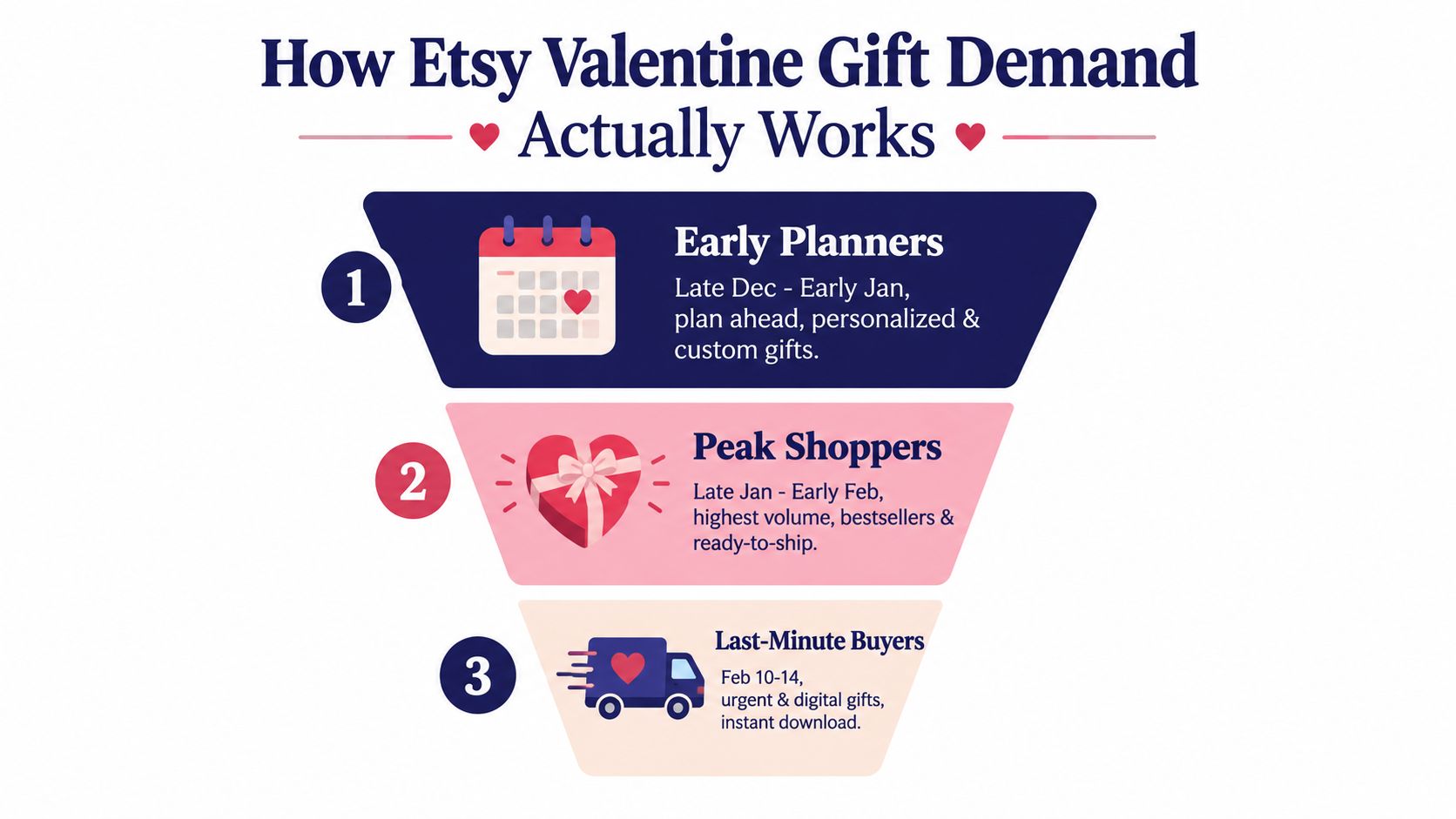
The three buyer waves
Early planners usually want the nicest version of the gift. Custom names, dates, pet portraits, matching couple art, and recipient-specific copy work well. They'll tolerate a few extra steps if the end result feels personal.
Peak shoppers arrive later and compare options faster. This group rewards simple listings. Clean mockups, clear production time, and one obvious personalization path beat complicated option trees.
Last-minute buyers are a different market. They care about speed first. Digital downloads, printable cards, editable templates, and products with very fast turnaround take over here.
A useful way to think about it is demand forecasting by buyer deadline, not just by keyword. That's why I like seasonal planning methods that map search behavior to production realities, such as these demand forecasting methods for ecommerce.
How personalization reaches the seller
Etsy's workflow for personalized items is straightforward when the listing is set up properly. Etsy Help explains that when a buyer orders a personalized item, the seller sees the personalization request on the Orders page and in the order email, which is summarized in this Etsy personalization workflow guide.
That sounds basic, but setup matters. If you ask for too much text, too many optional details, or unclear formatting instructions, buyers stall out at checkout. During the panic window, that friction costs sales.
Keep the personalization field tight. Name, date, or short phrase. Anything longer starts to feel like homework.
The behavioral split matters too. Couples often search with direct terms. Someone buying for a crush, friend, or secret admirer often searches more neutrally. They're less likely to type a very specific romance phrase and more likely to look for safer wording.
Later in the season, that difference gets even sharper.
A quick visual walkthrough helps if you want to see how this buyer urgency stacks up over the selling window:
Proven POD Niches for Etsy Valentine Gifts
The Valentine niches that hold up on Etsy are the ones tied to a clear recipient and a clear use case. Broad “Valentine shirt” ideas get buried fast. Narrow intent gives you room to rank, price better, and write tags that match how buyers search.
I learned this the hard way with generic couples apparel. It gets clicks, but newer shops usually hit a wall because the first page is full of established sellers, review history, and near-identical mockups. A tighter niche gives a POD shop a better shot.
Five niches worth testing
Couples apparel and matching sets
This niche still sells, but it is the toughest one in the bunch. Matching hoodies, tees, and sweatshirts work if the design reads fast in thumbnail size and the phrase is not something fifty other shops are already using. Before listing, check any phrase-driven design against the USPTO database. Valentine slogans are a common place for avoidable trademark problems.
Pet Valentines
Pet buyers convert well because the gift idea is already specific. Custom pet portrait mugs, pet name sweatshirts, and breed-focused designs tend to give you cleaner long-tail tags than generic romance products. They also let you write titles around recipient plus pet type, which is easier to rank than broad couple terms.
Friendship and Galentine gifts
This niche is stronger on Etsy than many sellers expect. Buyers want funny, safe, non-romantic language they can give to a friend, coworker, or sibling without making it awkward. Totes, tumblers, crewnecks, and simple printable cards usually fit better here than heavy romance designs.
Kids' classroom Valentines
This lane is less glamorous, but it can be profitable because the buyer intent is practical. Parents and teachers are looking for fast solutions, simple personalization, and quantity-friendly pricing. Digital products often fit best, but POD add-ons like sticker sheets or small favor tags can work if production times stay realistic.
Self-care and self-gifting
This niche has better staying power after February 14 than most romantic products. Affirmation prints, cozy apparel, candles, and spa-style designs work if the copy feels giftable without depending on Valentine-only wording. That makes leftover traffic easier to convert after the seasonal peak passes.
A quick reality check by niche
| Niche | Example Product | Honest Pricing View | Competition Note |
|---|---|---|---|
| Couples apparel | Matching sweatshirt set | Mid-range POD pricing | Hardest to win without reviews or a distinct visual style |
| Pet Valentines | Custom pet portrait mug | Mid-range to premium | Good entry point for newer shops |
| Friendship gifts | Galentine tote bag | Mid-range | Better results when wording feels specific, not generic |
| Kids Valentine items | Printable classroom cards | Lower price point | Stronger with simple offers and volume |
| Self-gifting | Affirmation art print | Low to mid-range | Easier to keep selling after the holiday |
The pattern behind these niches is simple. Etsy rewards specificity. “Gift for dog mom from pet” is easier to build tags around than “cute Valentine gift.”
If you want a useful example of how personalization can be framed from the buyer side, the Blushing Ivy gifting guide is worth reviewing. It shows how gift language can stay emotional without turning into vague filler.
For validation, I look for recipient-based search terms, manageable competition on page one, and room to rotate tags as the season gets closer. Broad, crowded ideas can still work, but newer shops usually get better traction by starting with low-competition Etsy niches and expanding once listings have some history.
Comparing Gift Formats That Convert
Not every Valentine product format solves the same buyer problem. Some sell because they're fast. Some because they feel more personal. Some because they're easy to price without scaring off a casual buyer.
For POD sellers, I keep coming back to three formats.
Where each format wins
Apparel works when the design carries emotional meaning quickly. It's visible in thumbnails, familiar to buyers, and easy to merchandise in bundles. The downside is phrase-based trademark risk and intense crowding.
Digital downloads win on speed. A printable card, wall print, or classroom Valentine can still convert very late because delivery is instant. That speed makes up for lower perceived value in many cases.
Custom digital portraits sit at the premium end. They feel more giftable, and buyers understand why they cost more. The friction comes from needing usable photos and clear personalization.
The trade-offs side by side
| Etsy Valentine gift formats compared for POD sellers | |||
|---|---|---|---|
| Format | Typical Price (USD) | Delivery Expectation | Trademark Risk |
| Apparel | Lower to mid-range | Production plus shipping | Higher if phrase-driven |
| Digital downloads | Lower to mid-range | Instant delivery | Lower, but still check sayings and themed phrases |
| Custom digital portraits | Mid-range to premium | Fast proofing, then delivery | Moderate, mostly from phrase use rather than artwork concept |
I'm keeping price bands qualitative here on purpose. Real viable pricing swings hard by product type, print partner, personalization level, and whether the shop already has review trust.
A format converts when it matches the buyer's deadline. That matters more in Valentine season than almost anything else.
What I'd choose in a small catalog
If I were launching a tight Valentine catalog from scratch, I wouldn't build it around five shirt designs that all target the same couple-buyer phrase.
I'd rather carry:
- One apparel concept with broad appeal and clean long-tail wording
- One printable or digital product for late buyers
- One custom gift format that justifies a higher ticket
- One non-romantic item aimed at friends, pets, or self-gifting
That mix covers more buyer urgency levels without forcing every sale through one crowded format.
Your Seasonal Launch Timeline for Etsy Valentine Gifts
The launch calendar matters more than the artwork style once Valentine season starts moving. Etsy's own guidance says the shopping cycle starts in December, picks up in January, and peaks in the first two weeks of February in this Valentine gift timing page on Etsy.
That means the season begins before most shops publish.
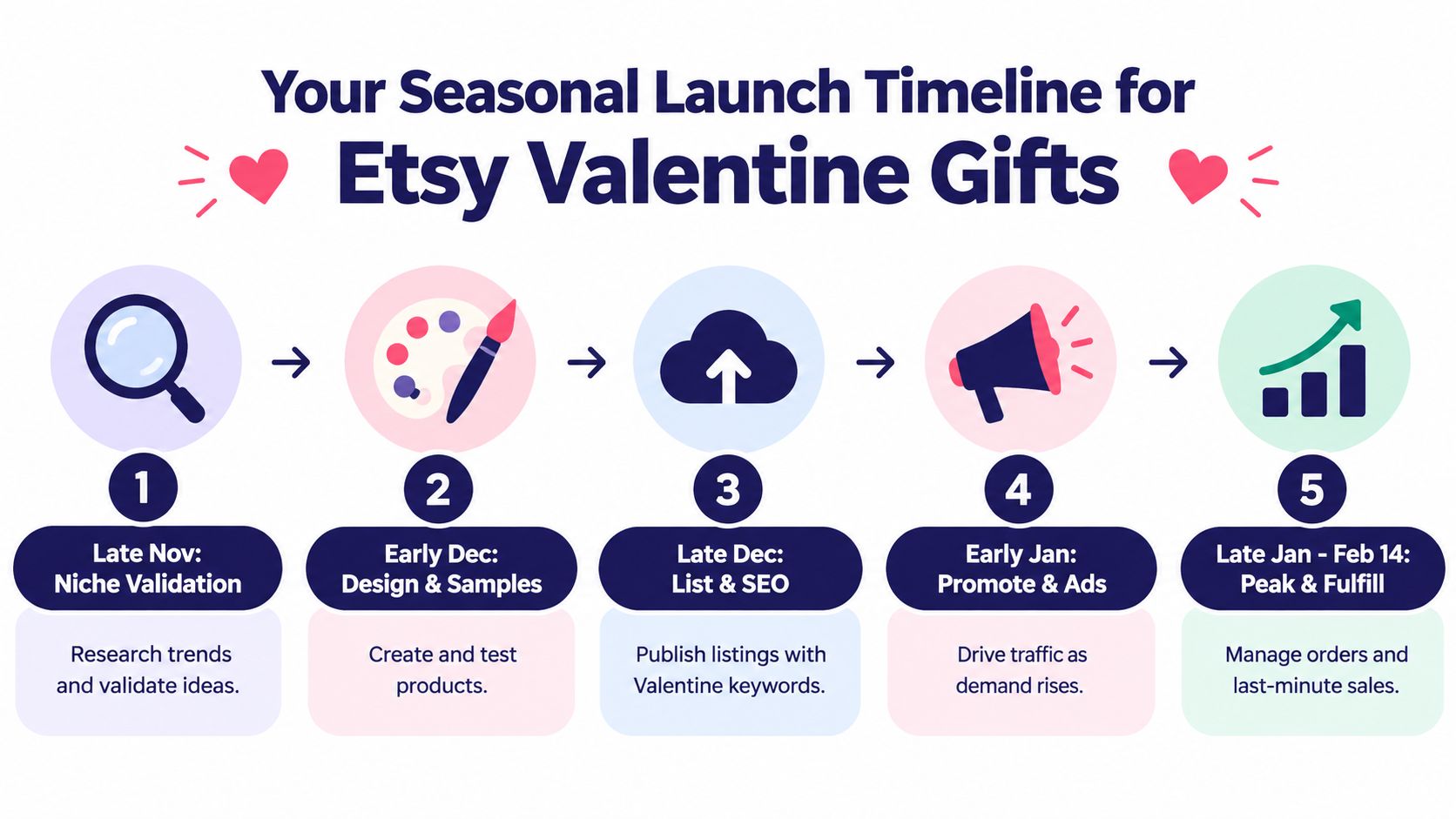
Late November and early December
Late November is for research and draft work. I wouldn't spend that phase endlessly polishing mockups. I'd validate niches, shortlist phrases, and check trademark exposure before designs are locked.
Early December is when I want at least a few listings live. Not perfect. Live. Etsy shopping interest for Valentine's has already begun by then, so indexing time matters.
Late December through January
Late December is where listing SEO should be in place. Titles, tags, images, and personalization settings should already exist before the strongest January buyer wave starts building.
The first half of January is the maintenance window:
- Refresh tags: Keep the core phrase stable, but rotate supporting modifiers.
- Check print partner timing: Holiday backlogs can spill into January.
- Add one more mockup style: Especially if your first image is too generic.
- Tighten descriptions: Buyers scan for delivery confidence and customization clarity.
Late January is usually the final serious edit point for organic traction. By then, I'd want turnaround windows stated plainly in the description, production expectations reflected in shop announcements, and any ad budget focused only on listings that already show signs of life.
If a listing hasn't found any footing by late January, I usually stop trying to rescue it with cosmetic edits and shift effort to faster formats.
A simple timeline prevents the classic mistake of launching everything at once. In this season, staggered publishing beats one big dump of listings.
Keywords and Tags That Match Etsy Valentine Search Behavior
Etsy Valentine keywords work best when they mirror buyer language, not seller language. Most weak Valentine listings don't fail because the design is awful. They fail because the tags are too broad, too cute, or too disconnected from how shoppers search.
Independent Etsy trend reporting has shown that intent-rich phrases like “personalized valentine gift,” “valentine's day cards,” and “couples gifts” can surge quickly in January in this seasonal Etsy selling calendar. That's why I don't build around “Valentine aesthetic” style terms unless they're backed up by a strong gift modifier.
Build around one head term, then layer intent
Start with a direct head phrase that fits the item. Usually that's something close to “valentine gift” or “valentines day gift.”
Then add buyer modifiers:
- Recipient modifiers like for him, for her, for couples, for kids, for dog, for best friend
- Format modifiers like personalized, custom, printable, digital download
- Use-case modifiers like classroom, Galentine, self love, matching, pet portrait
The strongest tags usually combine intent and recipient. A buyer who types “personalized valentine gift for dog mom” is easier to serve than someone typing only “gift.”
What I rotate and what I don't
I don't keep rewriting the core of a listing every few days. That can create noise instead of clarity.
What I do rotate during the ramp:
- Secondary tags tied to buyer type
- Supporting title wording after the main phrase
- Thumbnail emphasis if one audience is clicking more than another
What I leave stable:
- The anchor phrase
- The product type
- The main buyer promise
Read Etsy's dropdown suggestions first. Then use third-party tools like eRank or Marmalead as confirmation, not as orders from above. If Etsy itself keeps surfacing a phrasing pattern, that matters.
One more practical point. Etsy won't reward you for cramming in junk tags. Brand names you don't own, irrelevant color words, or bloated phrases don't make a listing smarter. They usually make it weaker.
The Non-Romantic Valentine Angle Most Sellers Miss
A big share of Valentine purchases on Etsy is not about a spouse or partner. Sellers who only target romantic couples leave money on the table, especially in POD where broad “for him” and “for her” phrases get crowded fast.
The better play is to map listings to the buyer relationship first. Friend. Dog mom. Teacher. Classroom parent. Self-gifter. Those shoppers use different words, click different thumbnails, and respond to different product formats.
I see four non-romantic pockets that deserve their own listings, not just a few swapped tags.
| Non-Romantic Valentine Niches on Etsy: Intent, Competition, Tag Anchor | |||
|---|---|---|---|
| Buyer Intent | Anchor Product | Primary Tag | Competition Density |
| Friendship gifting | Galentine tote or tumbler | galentine gift | Moderate |
| Pet gifting | Custom pet Valentine mug or bandana | pet valentine gift | Lower |
| Self-gifting | Affirmation sweatshirt or print | self love gift | Moderate |
| Classroom and teacher gifting | Printable valentines or teacher token | classroom valentines | Moderate to high |
These niches convert for different reasons.
Friendship buyers want warmth without couple language. Pet buyers respond to family-style sentiment and personalized art. Self-gifters tend to click humor, comfort, or affirmation. Classroom and teacher buyers care about speed, price point, and whether the item is easy to hand out.
That difference matters at the listing level. A mug aimed at a best friend should not share the same title logic or photo order as a pet memorial-style Valentine mug. The intent is different, so the conversion path is different.
If I were choosing one lane first, I'd start with pet Valentine gifts. Competition is still real, but the search intent is usually cleaner than the generic romantic terms. You can get specific with phrases like pet valentine gift, dog mom valentine mug, or cat lover valentine without fighting the worst of the couple-gift pileup.
Self-love is another angle sellers underuse, but it needs restraint. A generic “love yourself” design usually blends in. A stronger version ties the message to a product that fits the use case, like a comfort-color sweatshirt, a desk print, or a journal cover with a clear mood.
Classroom and teacher products can sell well too, but I treat them as a different operational category. Buyers there often shop later than you want, expect low prices, and compare options fast. Digital products and simple printable add-ons usually make more sense than apparel in that pocket.
One caution from experience. Do not force Valentine wording onto a design that already sells year-round for friendship, pets, or self-care. In many cases, a light seasonal wrapper works better than a full Valentine overhaul. Add a Valentine-specific thumbnail or supporting phrase, then test whether it improves clicks before cloning the whole listing set.
Trademark Safety Before You Publish a Listing
Trademark mistakes are one of the fastest ways to lose a Valentine listing after you have already spent time on mockups, tags, and ad tests. In POD, that risk is higher because a short phrase often is the product.
A word like “valentine” usually is not the problem by itself. Trouble starts with the full phrase on the design, especially if it looks cute, generic, and easy to reuse. Those are often the phrases sellers skip checking.
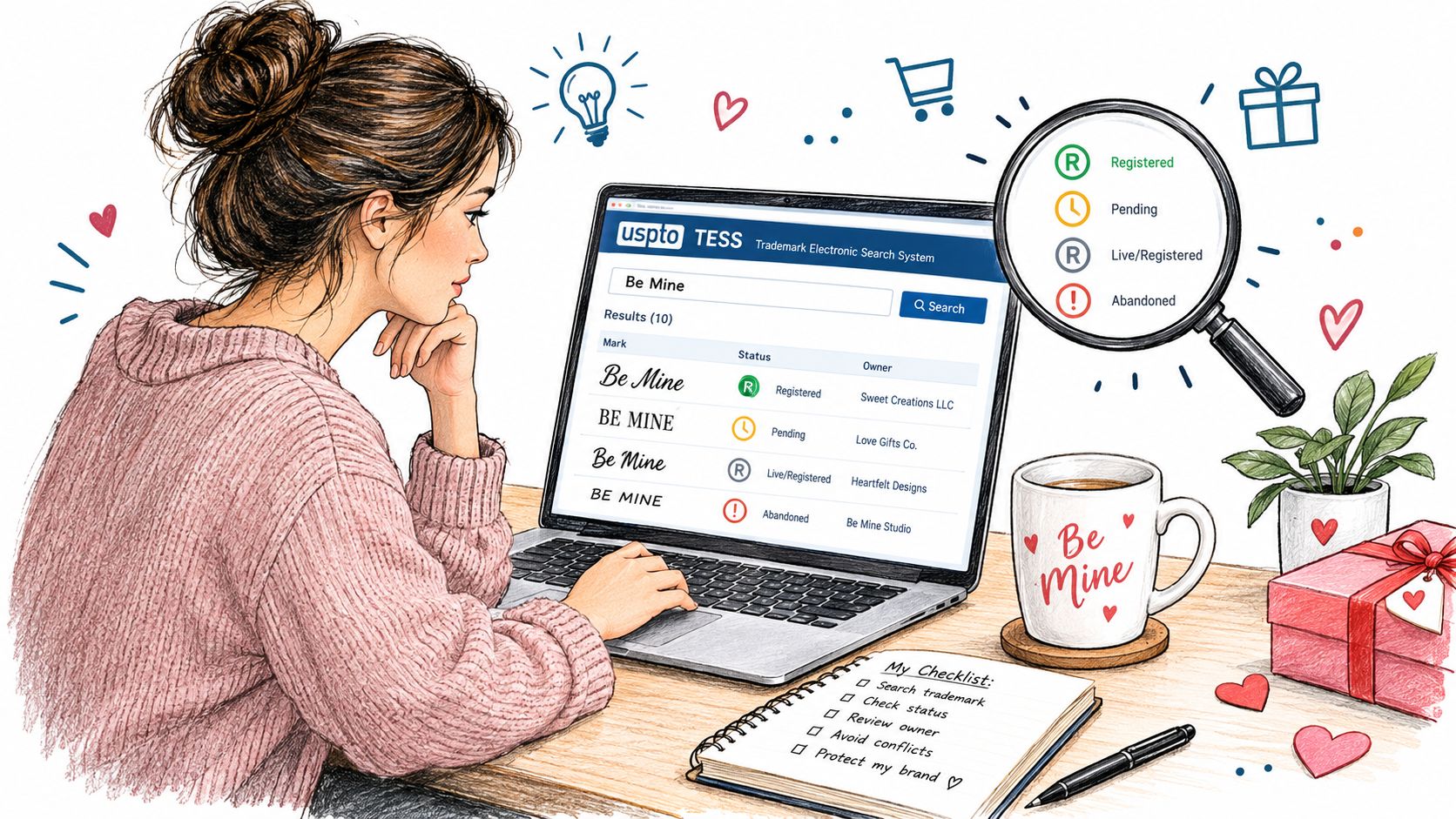
How I'd check a phrase like Be Mine
For a phrase like Be Mine, I check the USPTO database first. Etsy autocomplete is useful for demand. It is useless for clearance.
My process stays simple:
- Search the exact phrase in the USPTO trademark search.
- Filter to live records first.
- Review the product class, not just the phrase match.
- Read the goods and services field so you know what the registration covers.
For Valentine products, I check these classes first:
- Class 25 for apparel
- Class 16 for paper goods and printed items
- Class 21 for mugs and housewares
- Class 28 for toys or plush products
That last step is where sellers get sloppy. A phrase can look harmless, show up all over Etsy, and still be a bad bet for the exact product type you want to sell.
Reading the record correctly
The goods and services language matters more than the phrase alone. If a live registration covers apparel and your design puts that exact wording on a sweatshirt, the risk is obvious. If the registration covers something unrelated, the risk may be lower, but it still deserves a closer look before you publish.
I also check who owns the mark. If the owner is active on marketplaces or appears to enforce consistently, I move on and test another phrase. Valentine demand is short. It is not worth building a listing around wording that could disappear in January because a takedown came in.
A better filter is this. Do not ask whether a phrase feels generic. Ask whether a live registration touches your product category, your usage, and your exact wording.
Three rules I always follow
Keep risky phrases out of the title.
If a phrase could trigger a trademark complaint, putting it in the title only increases exposure.
Do not hide it in tags.
Tags are still part of the listing. A bad term does not become safe because buyers cannot see it on the front end.
Treat Etsy autocomplete as search data only.
It reflects what buyers type. It does not verify that a seller can use that phrase on a product.
If I want a wider check beyond the U.S., I use the USPTO first, then WIPO Global Brand Database as a second pass.
What this changes in a Valentine launch
Trademark checks connect to timing and tag rotation. If a phrase is even borderline, I do not build a whole seasonal push around it. I would rather publish earlier with safer long-tail wording than lose momentum replacing titles, tags, and mockups during the best sales window.
This matters even more with non-romantic Valentine angles. Friendship gifts, pet Valentine gifts, teacher Valentine items, and self-love designs often look less saturated, but those niches still attract repeated slogan use. The buyer intent may be cleaner. The phrase risk does not disappear.
If I were launching a Valentine listing now, I would do three things before publishing:
- Run the main design phrase through the USPTO
- Save two or three backup tag sets in case one phrase turns out too crowded or too risky
- Choose a buyer intent that does not rely on one catchy slogan carrying the whole listing
For research support, I would use a workflow that lets me watch tag movement and screen phrases quickly. Trendlytic is useful there because it tracks niches across Etsy, TeePublic, Amazon Merch, and Redbubble, and includes a built-in USPTO trademark check. It does not replace judgment. It just cuts research time when you are testing Valentine angles under a tight seasonal deadline.
If a phrase needs too much debating, skip it. There is always another angle you can sell.