Print on Demand Dresses: A Seller's Honest Playbook
I once uploaded a watercolor floral to a boho wrap dress mockup and convinced myself the product was ready. The first three orders arrived quickly enough to feel encouraging. Then two came back. One customer said the print had faded after two washes. Another said the dress ran a full size small and the pattern shifted along the seams.
The mockup had looked excellent. The product decision was poor.
That distinction matters with print on demand dresses. Demand is real, but dresses expose weak decisions faster than T-shirts do. Fit complaints are sharper, returns cost more to resolve, and a mismatch between fabric and print method can become a permanent review problem. The broader apparel printing market reached $18.7 billion in 2022 and was projected to reach $35 billion by 2027, with North America holding 32% of market share and the United States generating $12 billion in 2022, according to apparel printing market data.
A dress can sell year-round, but the buying reason changes. Vacation, wedding guest, workwear, festival, bridal shower, and warm-weather occasions each create different expectations around drape, coverage, stretch, and delivery timing. The profitable combination isn't just a pretty silhouette and a popular pattern. It's the right niche, fabric, construction, and print process working together.
Table of Contents
- A Quick Reality Check on Selling POD Dresses
- Finding Dress Niches That Actually Sell
- Print Methods and How They Affect Dress Quality
- Matching Dress Styles to Fabric and Use Case
- Sizing, Mockups, and Quality Control Before You Launch
- Pricing, Margins, and Profit Modeling
- Listings, SEO, and Trademark Safety
- Launch Checklist and Scaling Honestly
A Quick Reality Check on Selling POD Dresses
Why the mockup can mislead you
A digital mockup shows the composition, not the entire customer experience. It won't tell you whether the wrap tie sits securely, whether the fabric clings in the wrong places, or whether the artwork lands awkwardly across the bust and side seams.
That first failed batch taught me to treat the product page as the end of the process, not the beginning. If the dress is polyester-heavy but the artwork was prepared as though it were going onto cotton, the colors may look different from the design file. If the garment stretches and the print doesn't accommodate that movement, the customer notices at the neckline, waist, and seams.
Made-to-order production remains attractive because the supplier prints, cuts, and sews the item after purchase. Some dress products also advertise no minimums, which lets sellers test a concept without buying bulk stock. That reduces inventory exposure, but it doesn't remove product risk. A made-to-order return is still a lost sale, a replacement expense, and potentially an unhappy review.
The demand is broad, but the purchase intent is specific
The global print-on-demand market was estimated at $10.78 billion in 2025 and projected to reach $57.49 billion by 2033, while apparel contributed over 40% of revenue share in 2024, according to the print-on-demand history and market overview. A separate estimate placed the global print-on-demand apparel market at $6.1 billion in 2024, with a projection of $17.4 billion by 2033.
Those figures show a large commercial category, not a guarantee that a generic summer dress will work. Buyers choose dresses for context. A vacation buyer may value a light, quick-drying fabric and vivid all-over pattern. A workwear buyer may care more about opacity, sleeve coverage, and a forgiving cut. An occasion shopper may accept a higher price if the product photography and measurements reduce uncertainty.
Practical rule: Treat every dress as a fit-and-use-case product, not as a blank canvas for artwork.
For sellers who are still learning the basics of clothing ecommerce for store owners, the key lesson is simple. A dress store needs product discipline before it needs a large catalog. Start with one clear buyer, one suitable blank, and one print method that can handle the design.
Finding Dress Niches That Actually Sell
Most sellers begin by searching for attractive dresses. That reverses the useful order. Start with stores that already sell, then inspect the products creating the pattern.
Use a store-first research process
A practical workflow looks like this:
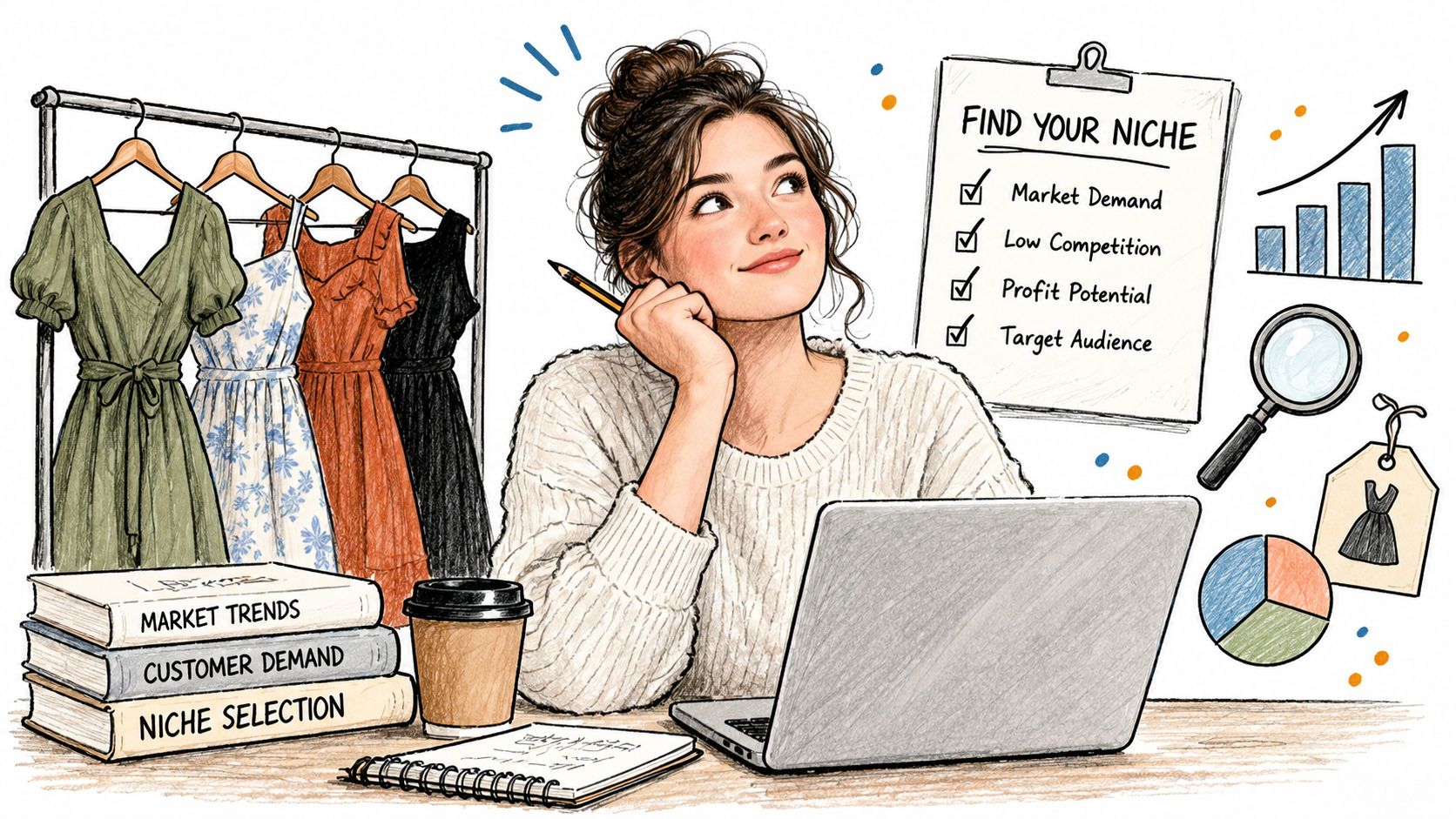
Pull dress-focused stores. Use Trendlytic to identify top-selling POD stores across TeePublic, Amazon Merch, Redbubble, and Etsy, then review the strongest dress-related catalogs instead of browsing isolated listings.
Inspect each seller's leading designs. Surface the seller's top one to three dress designs by recent sales velocity. The point isn't to copy artwork. It's to see whether a particular silhouette, motif, and audience repeatedly appear among products with current traction.
Separate the sub-niches. Group results into categories such as midi wrap dresses, all-over-print skater dresses, plus-size sundresses, nursing-friendly styles, resort dresses, and occasion-specific products.
Look for repeated design behavior. If one store keeps applying watercolor botanicals to wrap dresses, that repetition tells you more than a single attractive listing. It may indicate a coherent audience and a product format the seller trusts.
The useful comparison isn't just demand. It's demand strength against listing count. A store ranking for “floral AOP wrap dress” with only 40 competing listings presents a different entry point from generic “summer dress” with 800 listings. Those counts are a research example, not a promise of sales, and they should be checked in the live marketplace before launch.
Catch movement before it becomes crowded
Trendlytic's Trending Now view provides an hourly view of rising themes. Use it as a timing signal, not as a substitute for product validation. A theme can be gaining attention while still being a poor fit for your supplier's available fabrics or your target customer's preferred dress shape.
I also compare broad terms with narrower clusters. “Floral dress” may show obvious demand but heavy competition. “Gothic botanical wrap dress,” “retro resort skater dress,” or “minimalist linen-look work dress” may reveal smaller groups with clearer purchase intent. The right niche isn't always the one with the largest search volume. It may be the one where your product can communicate a distinct reason to buy.
Keep a research sheet with the store, style, motif, price position, fabric type, and listing count. For a deeper framework on identifying these gaps, use niches with low competition.
Chase stores, not search bars. Stores show you what sellers keep backing with new listings and current merchandising decisions.
Print Methods and How They Affect Dress Quality
Print method determines whether the dress feels intentional after laundering or merely looks attractive in the product image. There isn't one universal winner. The fabric's fiber chemistry comes first.
Match the process to the fiber
Dye-sublimation is usually the strongest fit for polyester and polyester-rich dresses. The dye bonds with the fiber, which supports photo-quality all-over printing, strong color coverage, and high wash durability with little cracking. That's why it works particularly well for AOP wrap, skater, and resort styles.
DTG, or direct-to-garment printing, performs best on cotton or cotton-rich garments. On polyester-heavy fabric, dye migration can affect the finished color unless the supplier uses low-bleed inks and careful curing. DTG can be useful for a targeted chest or front graphic, but it isn't automatically suitable for a stretchy wrap dress.
DTF, or direct-to-film transfer, can produce vivid targeted graphics across a wider range of garments. The trade-off is hand feel. A large transfer may feel heavier or less breathable than a dye-based print, which can matter on a fitted dress or a design that covers much of the torso.
Screen printing makes sense for repeatable, solid-color production runs where the artwork uses limited colors and the quantity justifies setup. It is less natural for one-off, photographic, or full-surface dress designs.
| Print Method | Best Fabric Fit | Color Vibrancy | Wash Durability | Typical Dress Use Case | Margin Impact |
|---|---|---|---|---|---|
| Dye-sublimation | Polyester and polyester-rich fabrics | Strong, especially for AOP | Strong when the fabric and process are correct | AOP wrap, skater, resort dress | Efficient for full coverage, but blank selection is critical |
| DTG | Cotton and cotton-rich fabrics | Strongest on suitable light bases | Can be durable with correct pretreatment and curing | Targeted graphic on a cotton-rich casual dress | Can become expensive when unsuitable fabric causes defects |
| DTF | Many smooth garment surfaces, subject to supplier testing | Vivid targeted color | Depends on transfer quality, stretch, and curing | Small or medium front graphic | Useful for controlled artwork areas, less ideal for heavy full coverage |
| Screen printing | Stable fabrics and repeatable production | Good for solid, limited-color graphics | Strong when properly cured | Small collections or repeated solid-color designs | Setup is harder to justify for isolated POD orders |
A commercially viable printed dress should retain color vibrancy through at least 30 washes, according to printed fabric guidance for summer dresses. In practice, poor pretreatment or curing can cause fading after only a few washes, while proper curing and cooler washing support flexibility and color retention.
My decision rule is straightforward. Use sublimation for polyester AOP designs, DTG for suitable cotton-rich targeted graphics, DTF only after testing stretch and hand feel, and screen printing when the production pattern supports it. If the method doesn't suit the fabric, no pricing adjustment will rescue the product.
Matching Dress Styles to Fabric and Use Case
A dress format creates physical demands that the artwork can't solve. Bodycon styles need elasticity and recovery. Wrap dresses need print continuity across panels and a fabric that drapes without becoming transparent. Sundresses need a reliable balance between lightness and opacity.
Five useful product pairings
An A-line dress is forgiving because the skirt has room to move and the shape doesn't depend entirely on body-hugging stretch. A polyester-spandex blend with sublimation can work well for vivid patterns, while a cotton-rich version may suit a smaller targeted graphic.
A skater dress benefits from a smooth, flexible base and an all-over process that keeps the artwork consistent through the fitted bodice and flared skirt. Large motifs need testing because the scale can look balanced on the torso but oversized on the skirt.
A bodycon dress has a higher return risk. Customers scrutinize compression, opacity, seam distortion, and size accuracy. A smooth poly-spandex base can support sublimation, but a dense dark design may reveal every construction issue if the fabric stretches unevenly.
An AOP wrap dress is commercially appealing because it supports floral, botanical, retro, and destination-led themes. It also creates alignment challenges at the overlap, tie, hem, and side seams. A sample is essential.
A sundress can work for vacation and warm-weather niches, but a lightweight feel doesn't excuse poor coverage. A polyester-spandex fabric may support sublimation, while cotton-spandex requires a print process suited to its cotton content.
| Dress Style | Best Fabric Blend | Recommended Print Method | Wash Durability | Return Risk |
|---|---|---|---|---|
| A-line | Smooth polyester-spandex or suitable cotton blend | Sublimation for AOP, DTG for targeted cotton graphics | Strong when fiber and curing match | Moderate, mainly fit and opacity |
| Skater | Polyester-rich stretch fabric | Dye-sublimation | Strong for correctly produced AOP | Moderate, especially artwork scale |
| Bodycon | Recoverable poly-spandex | Dye-sublimation or tested DTF placement | Strong if stretch and curing are validated | Higher, due to fit, sheerness, and seam distortion |
| AOP wrap | Polyester-rich draping fabric | Dye-sublimation | Strong with controlled wash care | Higher, because panel alignment affects perception |
| Sundress | Polyester-spandex or cotton-spandex selected for the print process | Sublimation for polyester, DTG for cotton-rich fabric | Variable unless tested on the exact blank | Moderate to high, depending on coverage and sizing |
Avoid sublimation on heavyweight cotton and DTG on loose-weave fabric. Those combinations can produce dull color, weak definition, or a surface that doesn't hold the print consistently.
For a useful material reference beyond POD catalogs, The Fabric Company apron guide offers practical context on how fabric behavior affects garments. The important seller habit is to evaluate drape, stretch, recovery, surface smoothness, and wash behavior together, rather than choosing a blank because its mockup looks polished.
Sizing, Mockups, and Quality Control Before You Launch
A single size chart can't serve every POD dress. Manufacturers and garment styles differ, and customers need bust, waist, hip, length, and stretch information that relates to the actual product they're buying.
Some listings cover a range from S to XL, while others extend from US 0 to US 28, depending on the style and manufacturer. One flare dress listing provides explicit bust, waist, and hip measurements from X-Small through X-Large, while a bodycon listing states that it can be made from US 0 to US 28, as shown in the dress product measurements.
Build the listing around the real garment
Use the supplier's product-specific chart. Don't merge measurements from a wrap dress with those of a bodycon dress, and don't describe a fabric as “true to size” unless your sample supports that wording.
Shrinkage also needs a place in the production plan. Most fabrics can shrink between 2% and 8%, according to custom maxi dress fabric information. That means artwork placement and finished measurements should account for the expected fabric behavior rather than assuming the printed panel will retain its original dimensions.
Show the design scale on a body-matched model. A tiny botanical repeat may look elegant in a flat preview but become visually noisy across a full skirt. A large graphic may look balanced on a front-facing mockup yet land awkwardly when the wearer moves.
Include fabric composition and weight in the listing when the supplier provides them. For context, a girls' sleeveless sundress example uses 95% polyester and 5% spandex at 6.5 oz/yd², while an all-over-print cotton bodycon example is listed at 8.85 oz/yd². Those specifications affect drape, stretch, and how customers interpret the garment.
My pre-launch quality routine
- Order samples: Test the actual blank and print method before publishing paid traffic.
- Check the seams: Inspect the neckline, waist, wrap overlap, hem, and side seams for registration drift.
- Wash the samples: Look for fading, cracking, pilling, distortion, and loss of elasticity.
- Photograph naturally: Use daylight so the customer sees a more honest representation of color and surface.
- Reject visible failures: Don't send a flawed batch to a customer just because it was made to order.
For measurement language that customers can understand, the perfect fit dress measurement guide is a useful reference. Clear measurements won't eliminate every return, but vague measurements create avoidable ones.
Pricing, Margins, and Profit Modeling
POD dress pricing gets difficult when sellers calculate only the supplier charge. Contribution margin must absorb production, shipping, marketplace or payment fees, customer acquisition, refunds, replacements, and the occasional sample that never becomes a listing.
I use a simple contribution model:
List price minus product cost, shipping, platform fees, payment processing, advertising, refunds, and replacement allowance equals contribution margin.
That model is less exciting than multiplying a base price by a markup, but it's harder to fool yourself with. A low-cost blank may have weaker drape or more returns. A premium blank may reduce conversion if the final price moves beyond the audience's willingness to pay. The right choice depends on the niche and the customer's reason for buying.
Build price from the product promise
A casual graphic sundress and a carefully photographed wedding guest wrap dress shouldn't carry the same commercial assumptions. The second product may require better photography, stronger measurement information, more sample work, and a higher tolerance for customer questions.
Before launch, write down:
- Base garment cost: Include the exact blank, not a similar catalog item.
- Print and construction cost: AOP production, labels, and special finishing can change the unit economics.
- Shipping exposure: Separate what the buyer pays from what you absorb.
- Acquisition cost: Model paid traffic and assume some visitors won't convert.
- Return reserve: Set aside part of every sale for fit-related issues and replacements.
- Target contribution: Decide what must remain after all variable costs.
Do not use a single universal multiplier unless it reflects your actual channel and return behavior. A marketplace with strong organic discovery may need a different price structure from a Shopify store buying cold traffic. The product launch strategy guide can help organize the research and launch assumptions, but your own sample and order data should determine the final model.
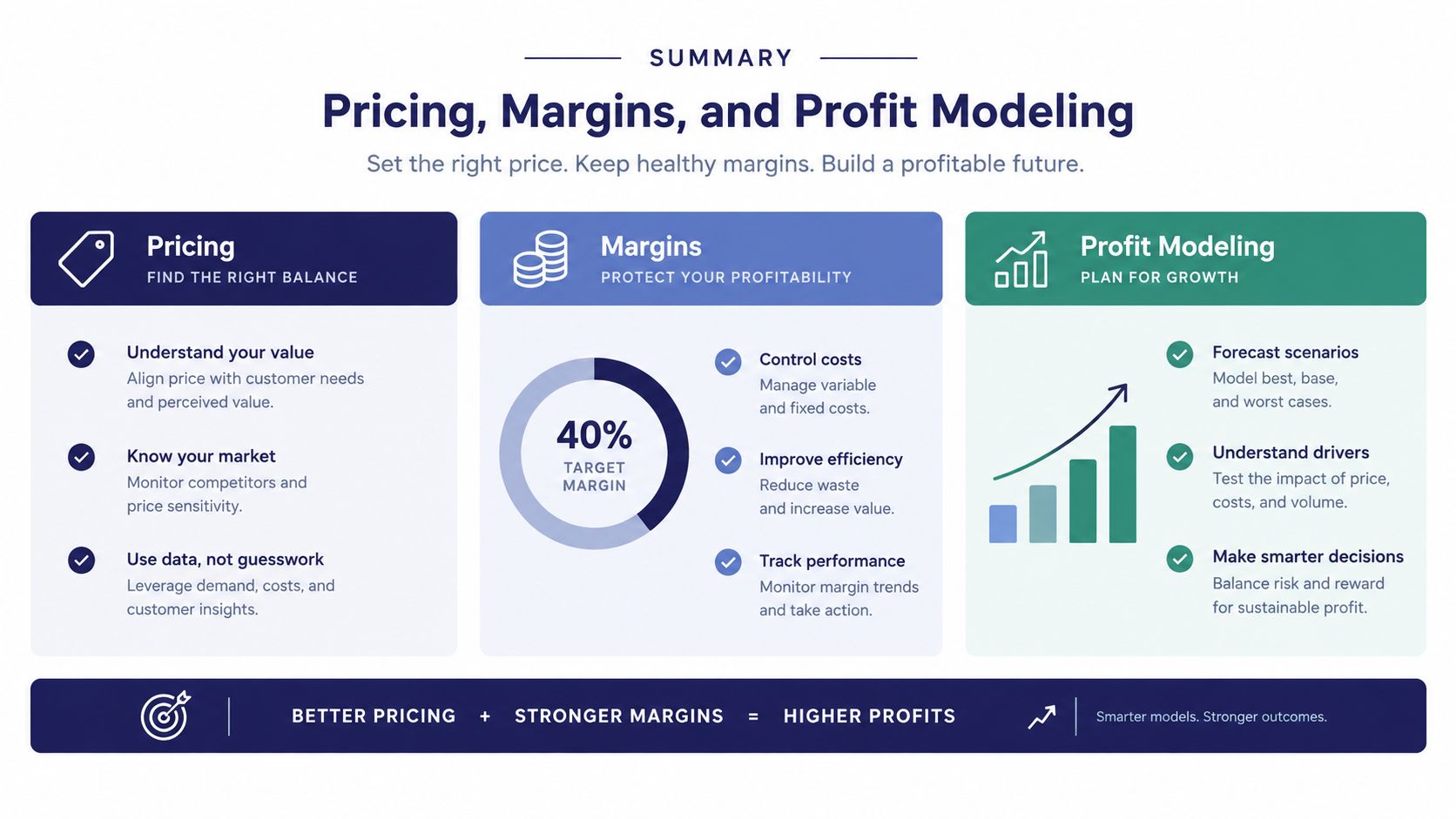
Margin check: If the product only works before returns, customer service, and advertising, it doesn't work yet.
Compare your proposed price with genuinely similar dresses, not with the cheapest item in the category. A lower price can attract clicks, but it also leaves less room to replace a misprinted order or answer a fit complaint. Better margins usually come from a clearer niche, stronger product photography, and fewer preventable failures, not from squeezing the supplier for a small unit-cost reduction.
Listings, SEO, and Trademark Safety
A dress listing has to answer four questions quickly. What is the garment, who is it for, when would someone wear it, and what makes the design distinct?
Use layered language rather than repeating one broad phrase. A primary product phrase establishes category relevance. A style phrase identifies the silhouette. An occasion phrase captures intent. A motif or color phrase helps the buyer decide whether the design belongs in their wardrobe.
| Layer | Example Keyword | Search Intent |
|---|---|---|
| Primary product | Print on demand dress | Finds the product category |
| Style | A-line wrap sundress | Defines construction and silhouette |
| Occasion | Wedding guest dress | Signals a specific buying situation |
| Motif and color | Gothic botanical black dress | Narrows aesthetic preference |
| Function | Vacation dress with stretch | Addresses practical use |
For Etsy and Amazon, study successful listings manually or with a browser extension that extracts tags, then cluster the terms in a spreadsheet. Separate phrases describing the garment from phrases describing the customer, occasion, fit, and visual style. On Google Shopping, make the product title readable first. Keyword density won't rescue weak images or missing measurements.
Protect the niche before publishing
A promising phrase may be a brand identifier, designer name, entertainment reference, or protected slogan. Pre-screen dress-specific phrases, collection names, and pop-culture terms through the USPTO trademark database before creating a range around them. Keep screenshots or notes from the search, and don't treat a phrase as safe merely because other sellers use it.
Trendlytic includes a built-in USPTO trademark check against 850K+ active USPTO trademarks, and its hourly Trending Now view can help identify dress tags gaining momentum before they become widely saturated. Use that information as a screening layer, then verify the legal position yourself before publishing.
Photo order affects conversion as well as search performance. Lead with a clear full-body image, follow with a back or side view, show the fabric close up, display the measurement chart, and add a lifestyle image that communicates the occasion. Write descriptive alt text that identifies the garment, color, pattern, and setting without stuffing unrelated phrases.
For broader listing structure, use SEO guidance for print-on-demand sellers as a reference. Choose the most accurate category available, keep the title natural, and make the first lines of the description useful before adding secondary details.
Launch Checklist and Scaling Honestly
A dress launch should be small enough to inspect and specific enough to teach you something. I wouldn't begin with a broad collection of silhouettes, colorways, and unrelated motifs. That creates too many variables to diagnose when sales or returns disappoint.
A practical launch sequence
- Validate one niche: Confirm that the audience, motif, occasion, and dress format have a defensible reason to exist.
- Select the blank: Choose the fabric and construction before finalizing the artwork.
- Choose the print process: Match the method to the fiber and coverage area.
- Order samples: Check fit, drape, color, seams, stretch recovery, and wash behavior.
- Create honest mockups: Show the print scale on a body that resembles the intended customer.
- Write the listing: Layer product, style, occasion, motif, fit, and care language.
- Run compliance checks: Review trademarks, copyrighted references, platform rules, and image permissions.
- Set the price: Use the full contribution model, including returns and acquisition costs.
- Soft-launch: Start with one controlled ad set or a limited organic test.
- Read the feedback: Sort customer comments into fit, fabric, color, construction, and expectation issues.
Don't scale a dress because one design receives attention. Scale when the same product keeps attracting qualified buyers and the reasons for returns remain manageable.
Add depth before adding volume
A second colorway usually makes more sense when the silhouette, fabric, and occasion are already working. A second silhouette makes sense when customer feedback reveals a different fit preference, such as requests for sleeves, a longer hem, or more coverage.
Repeat purchases also behave differently from T-shirts. A customer may buy multiple dresses from the same shop, but the decision often depends on season, occasion, size confidence, and wardrobe need. Watch for customers returning to related motifs or buying complementary items rather than expecting immediate multi-item behavior.
A matching scrunchie, kimono, or lightweight accessory can sometimes extend a collection more safely than adding several new dress SKUs. The product should share the same aesthetic and production logic, not just occupy space in the catalog.
Eventually, a print-on-blank hybrid or limited inventory run may beat pure POD when a proven style has stable demand and the savings justify the added storage and operational work. Until then, made-to-order production protects cash flow, but it won't protect a weak product decision.
Print on demand dresses can become a durable category, but they reward patience more than volume. Launch one well-matched product, measure the return reasons candidly, and let evidence decide whether the next step is a new color, a new silhouette, or no expansion at all.
Trendlytic helps POD sellers research live bestseller data across TeePublic, Amazon Merch, Redbubble, and Etsy, compare demand with competition, and check dress-related keywords for USPTO trademark conflicts. If you're choosing a niche before designing your next dress, visit Trendlytic and use the research to make a smaller, better-informed launch.