Best Selling Sewn Items on Etsy: What Actually Sells in 2026
Low-bulk, highly personalized items such as embroidered bags, reusable facial rounds, and quilted organizers are currently stronger bets than generic apparel because they match Etsy shoppers' appetite for distinctive gifts. Etsy's marketplace has more than 100 million items for sale, so the product that wins usually gives buyers a specific reason to choose it, not just another version of something familiar.
The most popular advice about selling sewn goods on Etsy is often the least useful: pick an easy pattern, make it in several fabrics, and wait for shoppers to find it. That approach ignores the actual competition. A simple tote may be easy to sew, but it's also easy for hundreds of sellers to imitate.
The more interesting opportunity sits in the overlap between texture, utility, personal identity, and gifting. That's why the best selling sewn items on Etsy are moving toward embroidered accessories, compact organizers, personalized keepsakes, and practical home goods with a clear point of view.
Table of Contents
- Why Generic Sewn Goods Are Losing Ground
- Top Performing Categories in the Current Market
- The Soft Stitch Era vs Evergreen Staples
- Optimizing Listings for Personalized Gift Searches
- Production Paths and Compliance Checks
- Validating Demand Before You Start Sewing
Why Generic Sewn Goods Are Losing Ground
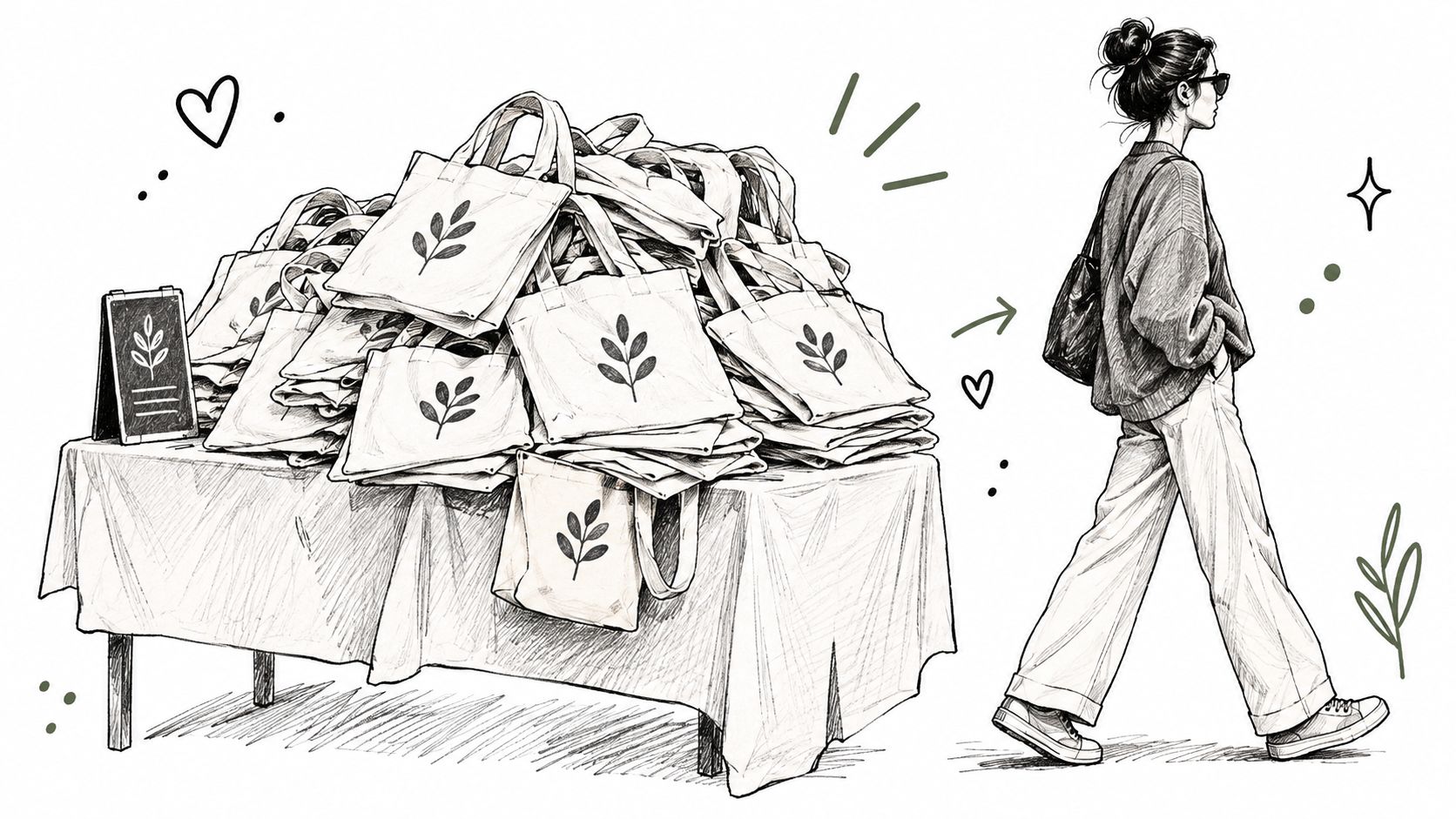
The easiest sewn products to make are often the hardest to sell. A plain tote bag, basic apron, or unstructured cushion may be useful, yet usefulness alone rarely convinces a buyer to choose one listing over another. If fabric color is the only point of difference, sellers end up competing on appearance, price, and shipping.
Evergreen basics still have a place. They perform better with a sharper purpose: a tote for a particular book club, a quilted organizer for crochet supplies, or an embroidered bag for a specific celebration. Each gives the buyer a clear use case and a story to share. A generic tote leaves that positioning work to the shopper.
Texture is doing more work than decoration
Etsy's Spring/Summer 2026 seller trend report describes growing interest in stitched products, handcrafted texture, expressive details, and meaningful keepsakes. It highlights embroidered bags rising by 77% with Gen Z and crochet clothing sales rising by 36%, according to Etsy's Spring/Summer 2026 seller trend report.
The figures are useful as signals of buyer motivation, rather than instructions to copy a particular item. Shoppers are paying for visible human involvement, tactile surfaces, and details that separate a product from mass-produced accessories.
That shift helps explain the current “Soft Stitch Era” aesthetic. Tactile materials, nostalgic details, visible stitching, and giftable designs create a warmer emotional response. A small embroidered motif can turn an ordinary pouch into a keepsake when it connects with a hobby, pet, place, celebration, or personal identity.
Practical rule: If a buyer can describe your item only as “a tote bag,” give it a clearer audience or occasion.
Why identity beats general usefulness
Products designed for a specific identity often speak more clearly than items aimed at everyone. A textile piece becomes more compelling when it signals that the buyer is a gardener, reader, pet owner, bride, teacher, traveler, or member of a particular aesthetic community.
Many best-selling lists show which products appear often, but frequency does not explain current demand. The more useful question is whether an item solves a small everyday problem while also expressing taste. That combination helps explain why identity-driven gifts are gaining traction now, especially as buyers look for objects that feel personal and made for someone.
A reusable facial round fits a familiar personal-care routine and reduces disposable waste. A quilted vegetable potholder adds personality to a kitchen task. A personalized bookmark turns an inexpensive textile object into a thoughtful gift. These products are compact, easy to understand, and simple to connect with a particular recipient.
The strongest sewn listings give a familiar shape a specific reason to exist. That reason is often where the opportunity is hiding.
Top Performing Categories in the Current Market
Generic sewn goods are easy to copy, while focused products give buyers a clearer reason to choose one listing over another. Current demand favors items that are small to ship, straightforward to understand, and easy to personalize. Reusable facial rounds, quilted vegetable potholders, pouches, and bag patterns appear frequently among Etsy's top-selling sewn items marketplace.
The opportunity is not just the product format. It is the emotional job the item performs. A pouch for anyone is forgettable. A pouch for a traveler, sewist, or new parent gives the buyer a recipient, occasion, and identity to recognize. That helps explain the shift toward the Soft Stitch Era, where texture, visible craft, and personal meaning make practical objects feel gift-worthy.
These categories also work well operationally. They use manageable material quantities, photograph clearly, and allow variations without requiring a completely new process. Fabric, embroidery, lining, initials, and intended use can turn one pouch construction into several targeted listings.
The practical winners
Reusable facial rounds fit an established personal-care routine. Sellers can bundle them, coordinate colors, or present them as a small gift. Their compact size keeps storage and shipping relatively simple, although repeat purchases depend on clear fabric, care, and quantity information.
Quilted veggie potholders give a routine kitchen item more personality. Food motifs, seasonal fabrics, cottage-style quilting, and personalized color palettes create a stronger gifting angle while preserving the product's protective function.
Pouches offer the broadest positioning range. One construction can serve travel organization, cosmetics, cables, sewing supplies, period products, or small gifts. Each audience needs its own photography and search language. Reusing the sewing process is efficient, but reusing the same listing message weakens relevance.
Bag patterns provide a digital route for sellers who can document construction accurately. They avoid finished-item shipping, but customers judge them by instructions, photographs, sizing clarity, and support. A pattern only works as a product when the buyer can follow it without filling in major gaps.
Motif research can extend beyond flat monograms. The 2026 embroidery hat guide offers ideas for applying personalized designs to caps, pouches, bags, and other textile gifts. Sellers still need to check that the finished product follows Etsy's applicable handmade and production rules.
Where these products fit on Etsy
Sewn products can sit across several major Etsy categories. Potholders and organizers suit home and living. Embroidered bags and personalized accessories connect with apparel and personal accessories. Patterns and kits fit more naturally within craft supplies. The Etsy's 2024 Integrated Annual Report coverage identifies these broad category areas as important parts of Etsy's marketplace.
For daily research, compare product formats with Etsy trending product signals. The useful signal is not every short-lived spike. Look for repeated combinations of a clear recipient, practical use, and recognizable visual language. That combination is where identity-driven gifting turns a familiar sewn item into a stronger market proposition.
The Soft Stitch Era vs Evergreen Staples
Evergreen products still provide dependable search demand, but they carry a familiar problem: sellers understand them, which means buyers see many similar options. Trending niche items can be harder to design and explain, yet they give the listing a more defensible position.
The distinction isn't just “new versus old.” It's broad utility versus specific meaning. A basic tote may be useful to almost anyone. A quilted organizer for knitting tools is useful to a narrower group, but that group may recognize the product immediately and value the fit.
Etsy's trend coverage describes the “Soft Stitch Era” through stitched textures and handmade pieces that feel unique and wearable, with particular relevance to Gen Z shoppers. The Etsy trends report also supports the broader observation that personalization and identity-driven gifting deserve more attention than generic best-seller lists usually provide.
Trending niches versus evergreen staples
| Category | Examples | Demand Driver | Competition Level |
|---|---|---|---|
| Trending niche items | Hand-embroidered bookmarks, puffer-style organizers, personalized pet accessories | Identity, texture, practical organization, and gift relevance | More focused, but requires sharper design and positioning |
| Evergreen basics | Plain totes, simple aprons, standard cushion covers | Broad utility and familiar search behavior | High, with frequent visual and price competition |
| Trending personalized accessories | Initialed pouches, embroidered bags, custom textile gifts | Individual expression and occasion-based gifting | Moderate to high, depending on the niche |
| Evergreen kitchen goods | Basic potholders, cloth napkins, kitchen towels | Everyday household use | High unless the fabric, construction, or audience is distinctive |
| Trending craft-adjacent products | Sewing patterns, themed kits, organizer sets | Hobby identity and practical learning | Focused, with higher expectations for clarity and support |
| Evergreen apparel | Basic skirts, shirts, and fabric accessories | Wearability and general style | High, with sizing, photography, and fit adding complexity |
The opportunity is in the combination
A niche item doesn't have to be unusual for its own sake. It should combine at least two useful signals. A hand-embroidered bookmark can serve readers and function as a gift. A puffer-style organizer can appeal to a visual aesthetic while solving storage friction. A pet bandana can combine personalization with a clear identity community.
Generic products often rely on ornamentation alone. Adding a flower to a pouch isn't enough if the listing still has no defined audience. The stronger version might be a quilted pouch for a specific craft, an embroidered organizer for a particular travel routine, or a personalized gift for a recognizable milestone.
“Useful” gets attention. “Useful for someone like me” earns the click.
Optimizing Listings for Personalized Gift Searches
A polished sewn item can still lose the click if its listing speaks only about fabric and construction. Gift buyers often search by recipient, occasion, hobby, material, color, or problem to solve. The listing should match that motivation while keeping the wording natural rather than stacking unrelated keywords.
The market context supports this focus. An overview reports 95.4 million active buyers, 8.13 million sellers, and approximately 33% of Etsy sales involving customized products, with gifts and accessories among the stronger demand areas, according to the cited Etsy marketplace statistics overview. Personalization matters because sewn goods can carry identity through initials, embroidery, color choices, or a clear connection to an event.
Start with the buyer's reason for purchasing
Write this sentence before drafting the title:
This is a gift for a ___ who needs or enjoys ___.
For a pouch, the answer might be “a reader who wants a compact case for bookmarks and pens.” For an embroidered bag, it might be “a bridesmaid who wants a personalized accessory for wedding events.” For a potholder, it might be “a home cook who likes cheerful vegetable motifs.”
That sentence supplies stronger language than “handmade fabric accessory.” It also guides the first photograph and the opening lines of the description. Soft, tactile details work best when they support a recognizable person or occasion. The stitching creates appeal, while the recipient gives the purchase a reason.
Build a focused title
Place the clearest product phrase near the beginning, then add the use case and recipient. A personalized pouch might lead with its construction, purpose, and gifting context instead of trying to attract every possible buyer.
Use tags and description copy to cover related searches such as:
- Recipient: reader gift, teacher gift, bridesmaid gift, pet lover gift
- Use case: travel pouch, cosmetic organizer, craft storage, reusable facial rounds
- Aesthetic: quilted pouch, embroidered accessory, cottage-style textile, soft stitch design
- Customization: initial pouch, personalized name, custom color, embroidered monogram
- Occasion: birthday gift, wedding favor, housewarming gift, holiday stocking gift
Do not call an item “best selling” unless the statement is accurate and supportable. Precise wording builds more trust than inflated claims, especially in crowded sewn-goods categories.
For a more methodical process, Etsy keyword research guidance can help compare wording in successful listings and distinguish broad terms from focused buyer intent. Trendlytic can support that comparison, but the final terms still need to describe the actual product.
Make personalization easy to buy
Personalized orders create avoidable friction when buyers cannot tell what information to submit. State what can change, where the text appears, which characters or colors are available, and whether you provide a proof.
A wedding collection benefits from the same recipient-first approach. The guide to personalised wedding gifts in Australia shows why the event and recipient should shape the offer, rather than treating personalization as a generic add-on.
Show scale, texture, interior details, and packaging. A close photograph can communicate stitch quality more clearly than a long paragraph. State limits plainly, including character restrictions, color choices, and any variation caused by handmade production. Buyers can then judge the item before checkout, which reduces unsuitable orders and clarification messages.
Production Paths and Compliance Checks
A sewn product can begin at your own machine and later involve outside help, but those paths carry different responsibilities. Sewing in-house gives you direct control over fabric, finishing, and small variations. A production partner can increase capacity for a repeatable design, provided the arrangement stays transparent and the listing remains accurate.
Under Etsy's Handmade Policy, handmade items must be made and/or designed by the seller. Reselling is not allowed in the handmade category. Etsy permits production partners for processes such as cutting and sewing, but you must disclose the partner in the relevant listing.
Choose the production path deliberately
Keep production in your own shop when the product's appeal depends on irregular texture, small-batch variation, or close customization. You retain tighter quality control, but your available hours set the ceiling. That trade-off matters in the Soft Stitch Era, where tactile details and personal meaning often make a gift feel specific rather than interchangeable.
A partner suits a design with stable measurements, repeatable construction, and consistent materials. Before handing over work, prepare accurate samples and a written specification covering fabric, dimensions, stitching, labels, packaging, and acceptable variation. Communication must be dependable, and outsourcing does not transfer responsibility for the product description or customer experience.
Etsy's Creativity Standards recognize handcrafted, hand-altered, hand-assembled, and computerized-tool products made in a seller's personal shop or home. They also describe a sewing machine as a hand-guided tool. That distinction helps separate handmade construction from prohibited resale, especially when a design combines personal work with outside production.
Check the design before production
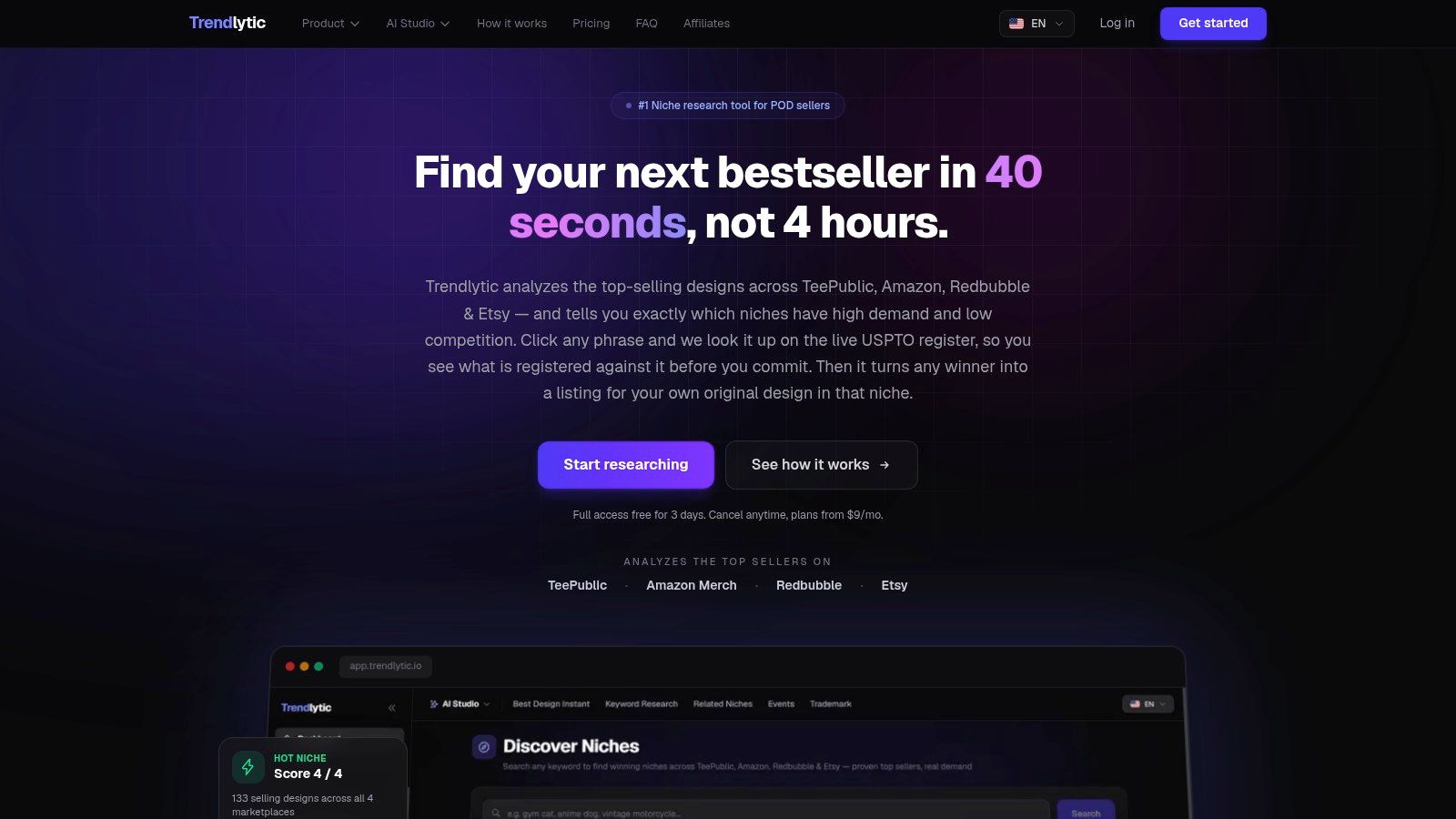
Review the embroidery, wording, character references, and slogans before ordering samples. A sewn product can create intellectual-property problems when its design uses protected branding. Trendlytic is one research option that analyzes live bestseller data across Etsy and other POD marketplaces, provides keyword and competition signals, and includes a USPTO trademark check for search terms.
Treat that check as screening, not legal permission. It can flag terms before you spend time on samples, photographs, or inventory, but it does not establish a right to use another party's mark.
Compliance check: Record who designed the item, who completed each production step, where it ships from, and what the listing discloses.
Keep those records aligned with the listing copy and shipping settings. Etsy requires accurate information about how an item was made, by whom, and where it ships from. A short visual walkthrough can also help you assess a research workflow before committing to a product direction.
Validating Demand Before You Start Sewing
Validation should happen before you buy a large amount of fabric or spend days refining a pattern. The purpose isn't to predict a guaranteed winner. It's to find evidence that a product combines a recognizable audience, a useful function, and an aesthetic buyers already understand.
Start with a narrow product concept rather than a broad category. “Sewn bags” is too wide to guide a production decision. “Personalized embroidered book bag for readers” gives you a recipient, a product type, a visual direction, and several possible occasions.
Use a simple validation sequence
Study the marketplace language. Search the exact product concept and note recurring words in titles, tags, reviews, and photographs. Look for language that describes why buyers wanted the item, not just what it is.
Separate format from positioning. A pouch may appear across many shops, but the strongest opportunity may sit in a specific use case such as craft storage, travel organization, or a personalized celebration gift.
Check the production burden. Estimate fabric usage, interfacing, closures, embroidery time, packaging, and the likelihood of remakes. A product can attract attention and still fail as a business if each order takes too long to finish.
Create a small test collection. Use related designs that share materials and construction. This gives you a better read on the niche than launching unrelated products with no common audience.
Review buyer behavior carefully. Favorites and messages can reveal interest, but they aren't the same as completed sales. Watch which designs generate questions, custom requests, and repeat attention, then compare that interest with your actual ability to fulfill orders.
Validate the problem and the identity
The strongest sewn items usually solve a modest problem while expressing a recognizable taste. Reusable facial rounds support a routine. Organizers reduce clutter. Pouches protect small belongings. Bookmarks and personalized accessories turn everyday objects into gifts.
That combination is more durable than a trend word alone. “Soft stitch” can guide the surface treatment, but the product still needs a reason for the buyer to own it. Texture attracts attention, while utility and identity help justify the purchase.
Etsy's scale makes broad categories tempting, but it also makes broad positioning dangerous. The platform had more than 100 million items for sale, and its strongest GMS-generating categories include home and living, jewelry and personal accessories, apparel, craft supplies, paper and party supplies, and toys and games, according to the Etsy annual report summary. A new seller doesn't need to compete with every sewn product. They need a clear entry point into one audience and one use case.
For additional product validation ideas, this guide to finding high-demand, low-competition products offers a useful framework for comparing demand signals with competitive pressure.
A practical starting test might be three related items: a personalized pouch, a matching organizer, and a small giftable accessory. Keep the fabric language consistent, make the recipient clear, and record which questions buyers ask. If shoppers understand the product quickly and request variations that you can produce, you have better evidence than a generic best-seller list can provide.
Don't sew a large inventory because a category appears popular. Validate the audience, the use case, the finishing time, and the compliance requirements first. The best selling sewn items on Etsy are not necessarily the most complicated products. They're the ones that make a buyer feel understood.
Trendlytic helps sellers research Etsy and other POD marketplaces, compare demand and competition, inspect validated bestseller designs, and check keywords against USPTO trademark records. If you want to test sewn-item niches before investing in materials, visit Trendlytic and use the research workflow as one input alongside your own product and customer judgment.